Recurring revenue has transformed the economics of the managed services industry. For MSPs, IT service providers and cloud providers, subscriptions, licences and consumption-based services create longer customer relationships, greater revenue visibility and a stronger foundation for growth.
Yet behind that predictable revenue model sits a process that is often far less predictable: getting the right information ready for billing.
As service portfolios expand, billing is rarely as simple as taking the same amount and invoicing it again next month. Customers add users, remove licences, upgrade services, change packages and consume different amounts of cloud resources. Contract terms vary, discounts differ between accounts, and services purchased from multiple vendors can operate on different billing cycles.
The revenue is recurring. The work required to validate it often is too.
Why Does Recurring Billing Become So Complicated?
The issue is not necessarily a lack of technology. Most established MSPs already use several business platforms across sales, service delivery, customer management and finance.
The challenge is that the commercial information required for billing is often distributed between them.
A subscription may sit in one system, pricing information in another and consumption data in a vendor portal. Contract details may need to be checked elsewhere, while recent licence changes or cancellations may still be sitting in operational workflows.
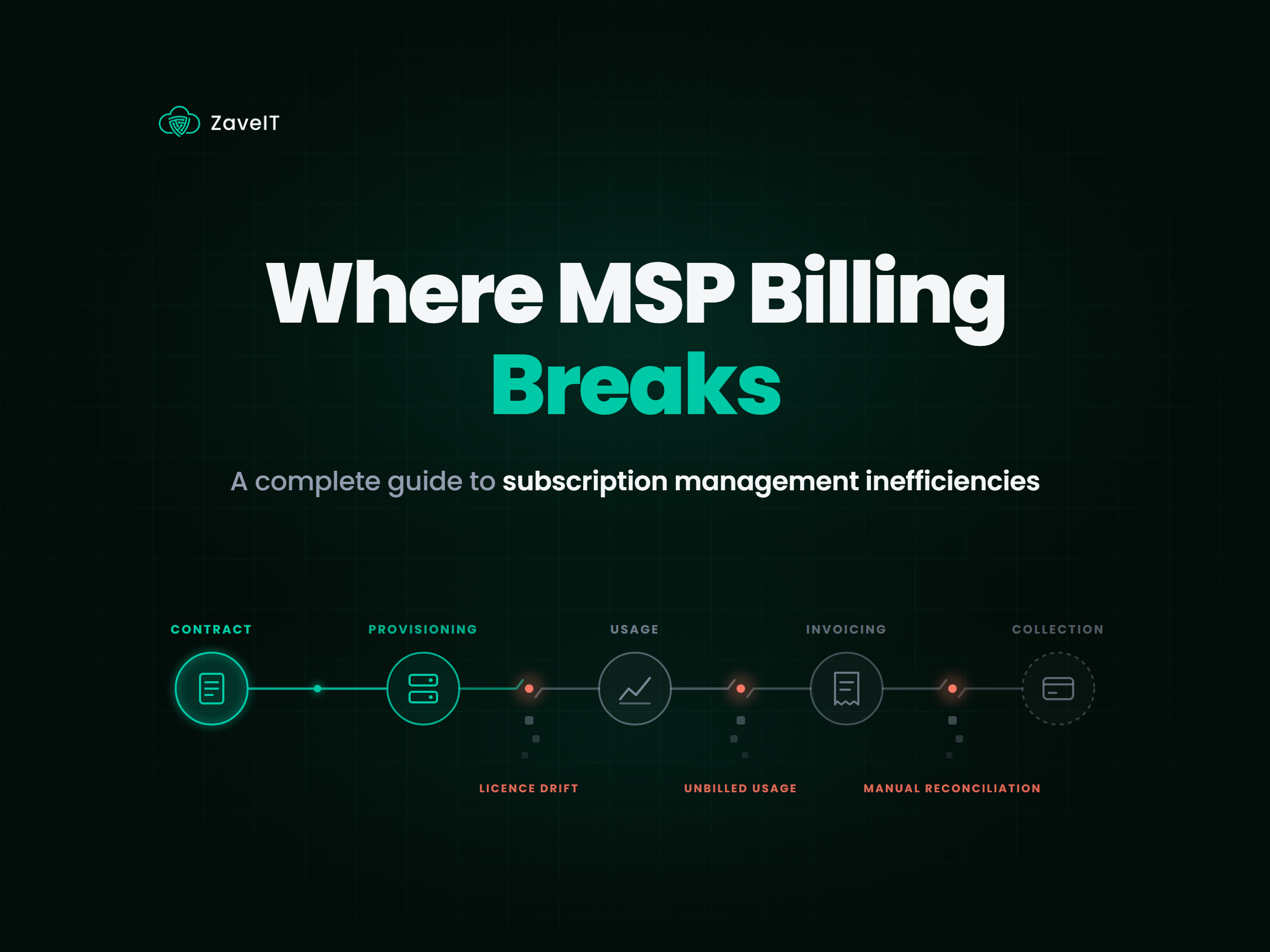
Before an invoice can be prepared, someone needs to bring that information together and answer a deceptively simple question: what should this customer actually be billed for this month?
When hundreds or thousands of subscriptions are involved, answering that question through spreadsheets, exports and manual checks becomes increasingly difficult.
A process that worked comfortably when an MSP had a smaller customer base can become a significant operational bottleneck as the business grows.
Is the Spreadsheet Becoming Your Integration Layer?
Spreadsheets are not inherently the problem. They remain useful for analysis, reporting and countless other business tasks.
The problem begins when spreadsheets become the layer used to manually connect several disconnected commercial systems.
If teams routinely export data from supplier portals, compare licence quantities, check service changes against customer agreements, validate prices and then prepare information for the finance system, the spreadsheet is effectively acting as an integration layer between the service being delivered and the invoice being created.
That creates dependency on manual reconciliation and individual knowledge. It can also make it harder to identify discrepancies early, because the complete commercial picture only becomes visible when someone brings the different sources together.
A missed licence change, an outdated customer price or a service that has been activated but not reflected in the billing workflow may appear small individually. Repeated across a growing recurring-service business, however, those exceptions create administrative effort and increase the risk of missed or inaccurate billing.
What Happens When Recurring Revenue Scales Faster Than Operations?
Growth exposes the weakness of fragmented processes.
An MSP may initially manage a relatively simple portfolio of licences, support agreements and managed services. Over time, it may add cybersecurity, backup, cloud infrastructure, storage, professional services and consumption-based offerings from multiple vendors.
At the same time, customers increasingly expect greater flexibility. They want to add services, change quantities, upgrade packages and access information without unnecessary friction.
Commercial complexity therefore grows in two directions: the provider is selling more sophisticated combinations of services while customers are changing those services more frequently.
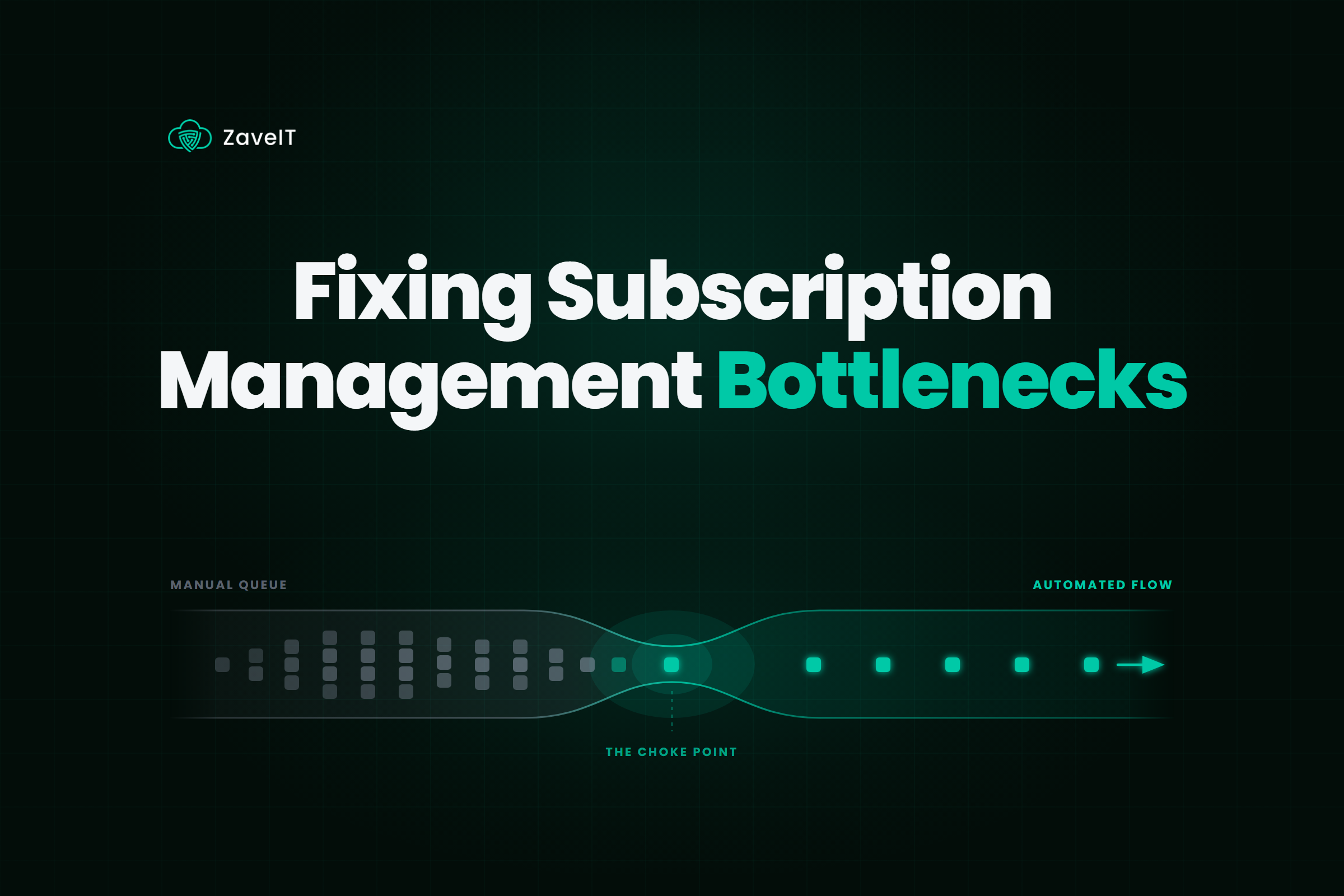
If every additional subscription also introduces another manual task for finance or operations, recurring revenue begins to create recurring administration.
That is where the scalability question changes. It is no longer only about how many customers the business can win. It becomes about how many customers and services the organisation can manage without increasing administrative overhead at the same rate.
What Should a Better Billing Process Look Like?
A scalable recurring-service model needs a clearer connection between the entire commercial lifecycle: what was offered, what the customer ordered, what became active, what changed and what should eventually be billed.
This is where structured commercial workflows become important.
Rather than waiting until the end of the billing period to reconstruct what happened, subscription information, service changes, relevant consumption data and customer-specific pricing can remain connected throughout the lifecycle.
For finance teams, that means starting with better-prepared billing information rather than spending the beginning of every invoice run collecting it.
For operations teams, it creates clearer visibility into active services and changes.
For management, it provides a more consistent commercial view of the recurring-service base.
And for the customer, a connected process can make ordering, managing and changing services significantly more straightforward.
Where Does ZaveIT Fit?
ZaveIT approaches the problem as part of a broader commercial workflow rather than treating billing as an isolated finance function.
The platform is built to help MSPs and IT resellers connect how they package, sell, deliver and manage IT services through one connected commercial flow.
Subscriptions, orders, service changes, pricing and applicable usage information can be structured around the customer relationship, creating a clearer link between the service that was sold and the information required for billing.
For supported integrations and configured services, billing information can then move into connected ERP or finance systems without requiring teams to manually rebuild the commercial picture every month.
Importantly, this does not mean every existing PSA, CRM or finance system needs to disappear. ZaveIT is designed to connect with existing business systems and reduce the repetitive work happening between them.
The objective is not simply to automate an invoice. It is to create better continuity across the commercial process that produces that invoice.
Can Recurring Revenue Really Scale if the Administration Behind It Does Not?
MSPs have spent years automating infrastructure, monitoring, provisioning and service delivery. Commercial operations now deserve the same attention.
As recurring-service portfolios become larger and more complex, providers need more than predictable revenue. They need predictable processes supporting that revenue.
That means reducing the dependency on end-of-month reconciliation, maintaining clearer visibility over active subscriptions and service changes, and ensuring that customer-specific commercial information can move through the business without being repeatedly re-entered or manually reconstructed.
The opportunity is ultimately bigger than faster billing.
A connected commercial flow can give teams more time to focus on customers, service development and growth instead of repeatedly chasing information across systems.
Recurring revenue was designed to make IT businesses more scalable.
The processes behind it should do the same.
ZaveIT helps MSPs and IT resellers connect services, subscriptions, orders, billing and delivery in one commercial flow so recurring revenue can grow without manual administration growing with it.